INGLEWOOD, Calif. — Two minutes before NBA commissioner Adam Silver was scheduled to address the media in an upstairs room at Intuit Dome, his deputy, Mark Tatum, cheerfully shook hands with reporters before taking his seat in the front row.
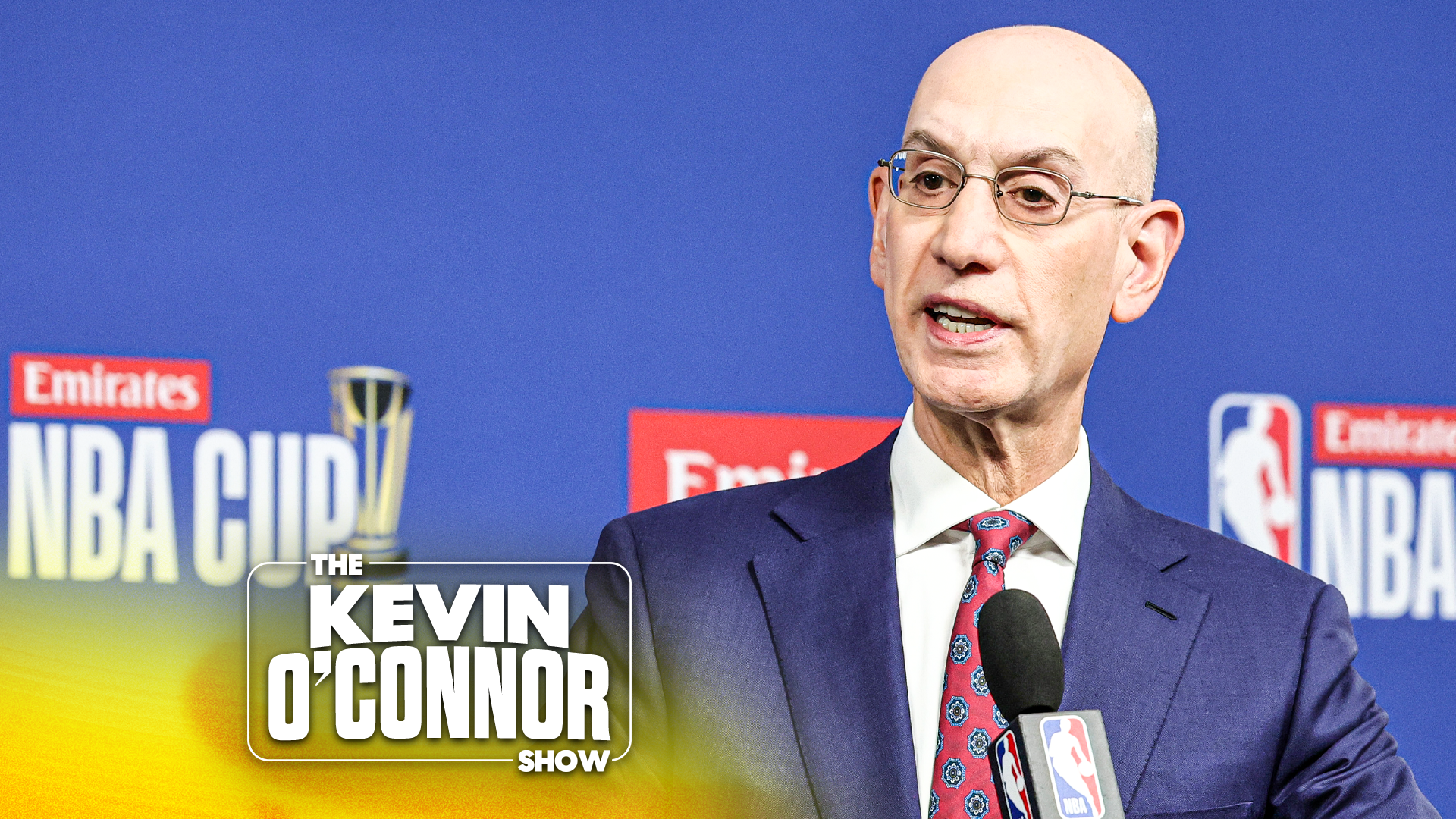
That the league's second-in-command was eagerly anticipating Silver's words, much like the other occupants in the room, was poignant. Given the most prominent talking points that have dominated league discourse lately — the tanking epidemic, sports betting issues and alleged cap circumvention — have become so prevalent, the build-up to Silver's news conference was seismic.
However, following the duration ofSilver's availability— he spoke for around 30 minutes — there were far more questions as a result of his answers (or lack thereof).
The first question posed to the commissioner, and the most detailed response Silver gave, was about the issue of tanking. This makes sense, given how quickly the league office acted in response to recent misbehavior from the Utah Jazz and Indiana Pacers. Both organizations were fined; $500,000 to the Jazz and $100,000 to the Pacers for actions detrimental to the core values of the NBA. Utah's modus operandi was far more egregious than Indiana's — sitting its two best players for entire fourth quarters in separate close games is worse than holding someone out under the guise of rest, but neither should be tolerated.
"Are we seeing behavior that is worse this year than we've seen in recent memory?" Silver asked Saturday. "Yes, it is my view. Which was what led to those fines, and not just those fines but to my statement that we're going to be looking more closely at the totality of all the circumstances this season in terms of teams' behavior, and very intentionally wanted teams to be on notice."
Now, therealproblem with tanking, at least from the vantage point of one writer, is it's the lone arena where 29 other teams can't share in the winnings. At least not initially. (Lottery picks don't always pan out, and sometimes the late firsts and early seconds become the mainstays.) But don't worry, there's no proposal of a quick fix to what's going on, although I'm sure you'veread or heard a plethora of ideas this week alone. All I'm suggesting is Silverhadto do something. For what it's worth, he honestly didn't even want to dignify the mere word of "tanking," but it's reached a point of no return.
There's an answer that lies somewhere in the middle of the ongoing epidemic; not completely punishing teams for losing, but not rewarding the seemingly cunning ones that try to game the system. Sometimes, you're the Sacramento Kings, which goes hand in hand with parity and purgatory. How much better are the Chicago Bulls set up for their future than, say, the Brooklyn Nets? The Clippers and Hornets are both 26-29 heading into the All-Star break — would you consider them to be on equal footing?
Advertisement
"Part of the problem is if you step back," Silver said, "the fundamental theory behind a draft is to help your worst-performing teams restock and be able to compete, and by the way, yes, we want parity, but parity of opportunity. … My sense is, talking to GMs and coaches around the league, that there's probably even more parity than is reflected in our records. That goes to the incentive issue. It's not clear to me, for example, that the 30th performing team is that much measurably worse than the 22nd performing team, particularly if you have incentive to perform poorly to get a better draft pick. It's a bit of a conundrum."
So where does it end? The Jazz aren't going to suddenly turn over a new leaf and be competitive the rest of the way. Half a million isn't enough to deter or prevent future behavior — Utah has clearly shown it's fine with throwing away money. Vince Williams Jr., who arrived at the deadline, played seven minutes in a 135-119 loss to Portland this week — he's owed $2.3 million. (The Jazz are only on the hook for a prorated amount, but you get the point.) How do you also govern the other teams that could potentially fall under the same umbrella? Silver needs to move quickly before tanking takes on a life of its own, especially considering the talent of incoming players in a few months.
On the topic of expansion, Silver essentially confirmed, then tried to reverse his words about the possibilities of Las Vegas and Seattle being the NBA's next destinations.
"My sense is at the March Board of Governors meetings, we'll be having further discussions around an expansion process," Silver said. "We won't be voting at the March meeting, but we will likely come out of those meetings ready, prepared to take a next step in terms of potentially talking to interested parties. No, it doesn't have to be a two-team expansion. Frankly, it doesn't have to be any number of teams."
Hmm, sure? There are a number of hoops to jump through before arriving at City X and/or Y as expansion teams, but kicking the can down the road by saying you'll make a decision on making a decision in a few months is not as clear as one may think.
In the case of Kawhi Leonard, Clippers owner Steve Ballmer and alleged cap circumvention, Silver conceded judiciary control to the Wachtell Lipton firm, the NBA's go-to litigation arm. Ballmer and the Clippers are alleged to have orchestrated a $28 million endorsement deal — an absurd amount of money, enough to seriously threaten the integrity of the league. Maybe it's not as outlandish as former referee Tim Donaghy's scandal (Wachtell Lipton took around a year to finalize its investigation in that matter, according to The Athletic), but the league doesn't need this to drag on for nearly the same length of time. The backlash, not only from fans and media, but the other 29 owners could be seismic.
"I'm not involved day-to-day in the investigation," Silver said. "I think, as I've said before, it's enormously complex. You have a company in bankruptcy. You have thousands of documents, multiple witnesses that have been needed to be interviewed. Our charge to the Wachtell law firm is to do the work and then come back and make recommendations to the league office, and that's where things now stand."
All-Star Weekend, in its purest form, is supposed to be a celebration of the good parts of the NBA — the inclusivity, the opportunity and the excellence. An uplifting view of the state of the league. Instead, we're reminded of the economic and moral perils of basketball at the highest level, and head into the break with a slew of unsolved problems.
