
As Venezuelans in the United States celebratedthe ouster of their country's tyrannical leader, Gustavo Garagorrywent live on Instagramin a red MAGA cap, his native country's red-blue-and-yellow flag draped around his neck. He cheered PresidentDonald Trump.
But days after U.S. forces captured Nicolás Maduro, sobering realities are setting in.
Across the United States, Venezuelan émigrés have watched helplessly as the Trump administration has revoked or cancelled nearly every legal pathway once open to them for staying here.
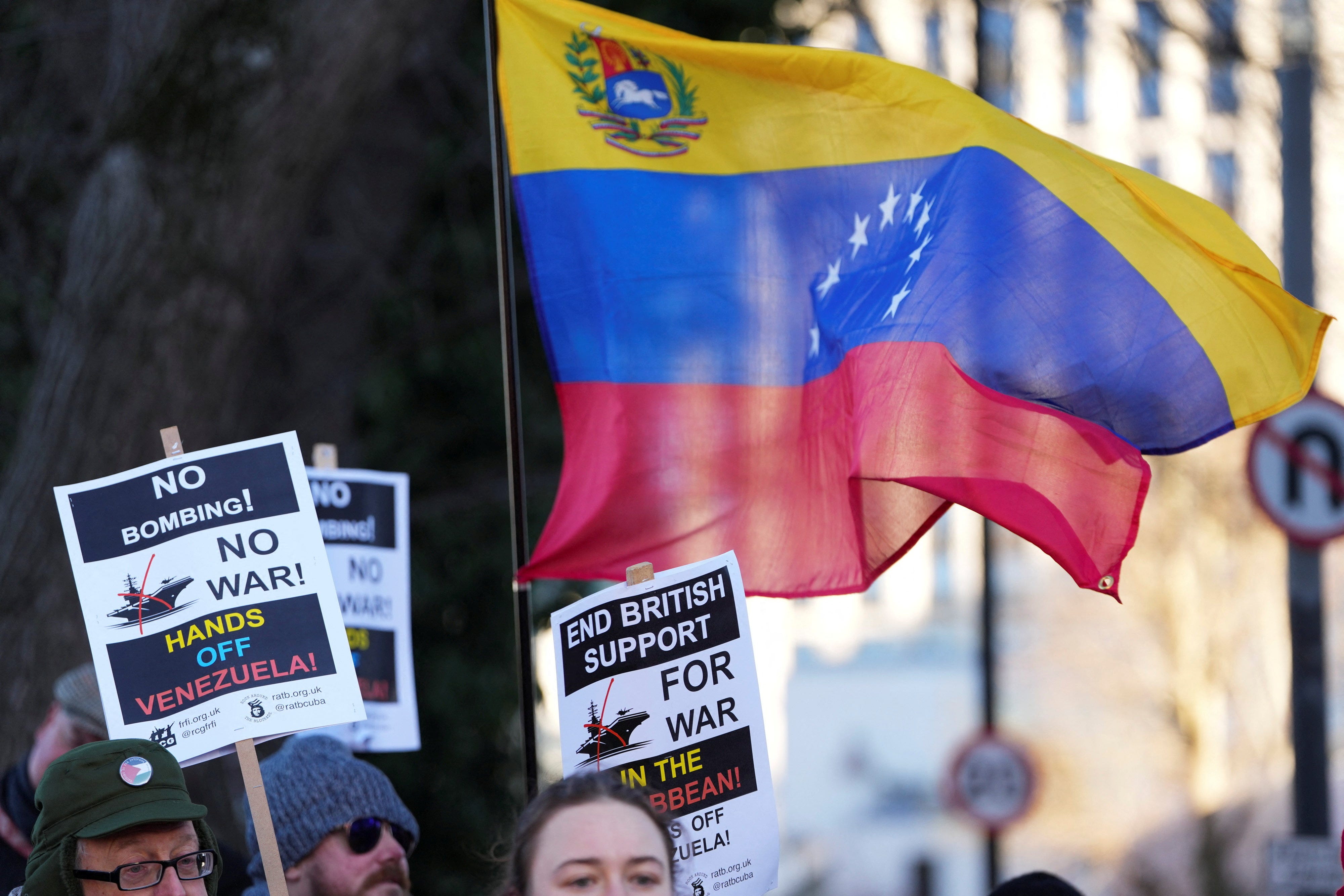
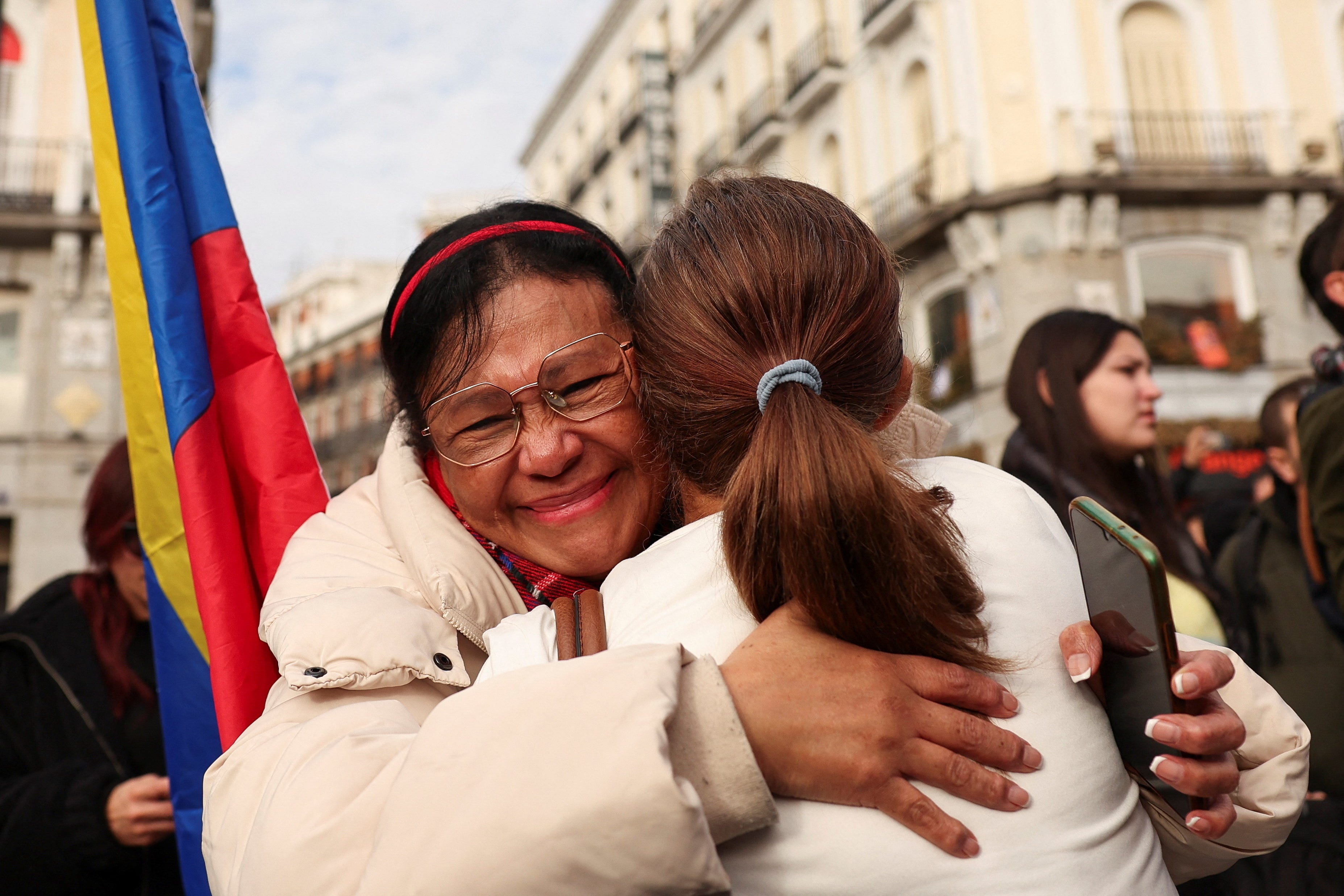
 Reactions to the United States' bombing of Venezuela and capture of the country's president Nicolás Maduro ranged across the world. Some celebrated the operation while others rebuked Trump's intervention in the South American country. See the reactions in photos, beginning here with Venezuelans living in Chile celebrating in Santiago on January 3, 2026." style="max-width:100%; height:auto; border-radius:6px; margin:10px 0;" loading="lazy" />


See reactions after US explosions in Venezuela, Maduro capture
Reactions to theUnited States' bombing of Venezuela and capture of the country's president Nicolás Maduroranged across the world. Some celebrated the operation while others rebuked Trump's intervention in the South American country. See the reactions in photos, beginning here with Venezuelans living in Chile celebrating in Santiago on January 3, 2026.
And inside Venezuela, Maduro may be gone, but the regime's repression was swift and iron-fisted.
Many Venezuelan immigrants aren't allowed to stay, but they can't safely go home, said Garagorry, president of the Venezuelan American Republican Club in Doral, Florida.
"The situation has put the Venezuelan community in a very vulnerable position," he said.
Since Trump took office, more than half a million Venezuelan immigrants have lost or are at risk of losing their legal status to remain in the United States.
The Trump administrationcanceled the Temporary Protected Statusof more than 600,000 Venezuelans and revokeda humanitarian parole programthat allowed roughly 120,000 Venezuelans to come legally for two years, with sponsorship.
At the same time, the administration is short-circuiting applications for asylum by asking judges to dismiss or pre-emptively cancel cases. The administration has argued that Biden's protections were unlawful or unnecessary and that the asylum system, designed to protect certain groups of persecuted people, is rife with false claims.
"It's devastating and tragic that you have people who risked everything only to find a completely dysfunctional system" in the United States, said Lisa Koop, director of legal services at the Chicago-based National Immigrant Justice Center, which represents asylum-seekers.
Tricia McLaughlin, the Department of Homeland Security's assistant secretary,told FOX Newson Jan. 4 that Maduro's capture meant Venezuelans can "go home."
"The great news for those who are here from Venezuela on Temporary Protected Status is that now they can go home with hope for their country – a country that they love – that there is going to be peace, prosperity and stability," she said.

Garagorry – who repeatedly thanked Trump for taking decisive action against Maduro – told USA TODAY he felt an optimism for the future in Venezuela that he didn't have before. But he also sees a long and difficult road ahead.
"Venezuela isn't safe for anyone," he said. "Not for those who left, not for those still there."
Maduro is gone but his government remains
Venezuelan American Niurka Meléndez, 53, won asylum in the U.S. two years ago alongside her husband and son. The couple,who fled their native country in 2015,founded a nonprofitin New York City to help others find their footing in the United States.
She was a vocal critic of the Maduro regime. His capture on Jan. 3 opened a window of hope for her that quickly clouded over as she watched the armed militias known as "colectivos" take to the streets of Caracas, the country's capital and her hometown.
"That is a dream," she said of being able to safely return one day to Venezuela, even to visit. "But it is not the reality, yet."

Her own asylum process took almost nine years, Meléndez said. Tens of thousands of her countrymen and women are awaiting a decision in their own asylum cases. But their prospects for success appear to be dimming.
Venezuelans had more than 132,000 pending asylum cases in U.S. immigration court as of 2024, according to data compiled by TRAC at Syracuse University. (There is overlap in the numbers, as people with Temporary Protected Status may also have applied for asylum.)
At the direction of the White House, U.S. Immigration and Customs Enforcement attorneys have been asking immigration judges to drop asylum cases before they hear the merits of a claim.
ICE is requesting case dismissals, then placing immigrants into a fast-track deportation process. Separately, ICE has begun asking judges to pre-emptively cancel asylum cases, a process called "pretermission," claiming immigrants have no right to seek protection in the United States because other countries – Honduras, Guatemala, Uganda – have agreedto accept asylum-seekers.
Maduro may currently be detained in a Brooklyn jail to face U.S. drug-trafficking charges, but Meléndez said the Venezuelan government that endangered the lives and livelihoods of those who left is still largely intact.
"There is a lot that has to be done in order for us to really scream out loud, 'Freedom! We are free,'" Meléndez said.
Venezuelans became the 'face' of mass immigration
The 770,000 Venezuelan immigrants living in the United States representedjust 2% of the nation's foreign-born populationin 2023, according to the Migration Policy Institute.
But Venezuelans have also been one of the country's fastest growing immigrant groups, with a population thatsurged more than 300%between 2010 and 2023.
Their dramatic arrival during the Biden administration – an exodus of families trudgingin large groupsthrough the jungle of theDarien Gap, making the dangerous overland journey to the U.S.-Mexico border – captivated some Americans and enraged others.

Venezuelan migration figured prominently in the 2024 presidential campaign, at a time when Texas Gov. Greg Abbottwas sending busloads of migrantsfrom there to Democratic cities ill-equipped to support them. Unlike any other immigrant group that came before them, this influx of Venezuelans had neither friends nor family to receive them in the United States.
"Venezuelans became the face of this shift in migration that began in late 2021 of migrants arriving at the border who didn't know anybody and had nowhere to go," said Aaron Reichlin-Melnick, senior fellow at the nonpartisan American Immigration Council.
When Trump took office, Venezuelans also became the face of his mass deportation campaign.
They were among the firstsent to an offshore prisonat the U.S. military base in Guantanamo, Cuba.Broad-brushed as gang membersand criminals, Venezuelan men were also among the first sent to El Salvador'snotorious CECOT prison.
But apart from these headline-grabbing moves, the Trump administration has struggled to ramp up deportations of Venezuelans.
The administration successfully pressured Venezuela to accept regular deportation flights before Maduro's ouster. But a relatively small number of Venezuelans were deported last year: 14,310 people between February and December, according toHuman Rights First, which monitors ICE flights.
The number highlights a growing gulf in U.S. policy.


Venezuela's VP Delcy Rodriguez takes over after Maduro capture
Venezuelans who arrived in the United States during the Biden administration aren't being allowed to stay. The administration can't effectively send them all back. But returning to their homeland isn't, for many, a viable option.
Nearly 8 million Venezuelans have fled the country in recent years, some 7 million to neighboring countries in Latin America and the Caribbean.
Once the most prosperous country in South America, economic collapse and runaway inflationhas left the vast majority in poverty, according to the Wilson Center. Maduro's government was known for orchestrating harsh repression of dissenting views. It remains the norm: AUnited Nations fact-finding missionconducted in the wake of Maduro's capture found evidence of extra-judicial killings, arbitrary detentions and forced disappearances.
The night of Maduro's ouster was at least the second time in as many years that Venezuelan politics kept Venezuelan American Patricia Andrade awake in Miami at ungodly hours. The first time wasthe night of Venezuela's 2024 presidential election, which outside observers widely believe was stolen by Maduro.
When the news of Maduro's capture hit on Jan. 3, "at the beginning everyone, and I mean everyone – family, friends, neighbors, the priest – was celebrating," she said. "I'm happy they removed Maduro because he needed to be removed. But if I'm honest, I'm not celebrating anymore. What's left is worse."
Hoping Trump will make it safe to go home, or safe to stay
Venezuela's interim president,Delcy Rodríguez, and top leaders including the interior minister and head of the armed forces, have sent mixed signals in the days since Maduro's ouster.

After calling the "colectivos" into the streets, the regimedetained more than a dozen journalists, including foreign correspondents, at Rodríguez' swearing-in – then released most of them a day later. Venezuelan officials on Jan. 8began releasing some political prisonersfrom two notorious prisons. But the National College of Journalists the next daydenounced ongoing press persecutionand called for the release of 22 still detained communications professionals.
Garagorry, meanwhile, was getting ready for his Venezuelan American Republican Club's annual gala later this month, to be held at Trump's golf course and resort in Doral – a hub of Venezuelan immigrants and exiles. Local elected officials are invited, as are Trump cabinet members. There are plans for an exuberant celebration of Maduro's fall.
Still, there is also an undercurrent of unease.
"I have friends and family here (without status) and, obviously, they are scared," said Garagorry, a naturalized citizen. "They've got no choice but to sit tight and wait. Something's got to happen to give a little bit of peace to our people – a new law, something to give relief to the Venezuelan community."
"We cut off the snake's head" in Venezuela,he said, "but the snake is still moving."
Lauren Villagran covers immigration for USA TODAY and can be reached at lvillagran@usatoday.com.
This article originally appeared on USA TODAY:Venezuelans in the US celebrating Maduro's fall now fret their future
